Showing posts with label Augmented reality. Show all posts

Thursday, October 31, 2013

AdTech London -Summary & thoughts for traditional media


LONDON- Time waits for no man, and AdTech London has come and gone though I realise I never got a chance to summarise my experience there.

One of my objectives was to see how deeply augmented reality capabilities are being integrated into advertising experiences, especially those that cross over different media i.e. print to web.

It was clear to me that the effectiveness of augmented reality has been proven -a large newspaper group quoted some interesting stats on the effectiveness of recent ad campaigns that linked to digital content, with a clear route to monetization of those ads.

This made me think however that many publishers are still to fully grasp the opportunity to monetise with AR. Layar published a great article recently with some useful pointers:

1. Use AR to upsell print ads -that's right, AR can be used to turn those now standard ads into premium ads. Im fact, in Canada Glacier Media (a local publisher) plans to make an exra $7.5m thanks to their up-selling efforts for Layar-enhanced ads.

2. Sponsored Editorial Content. Special editorial features can be linked to video interviews and sponsored for anything from $1,000 to upwards of $10,000

3. Print to e-commerce. Mobile commerce is booming, with some web portals taking over 25% of sales via their mobile channel. What better way to find the stuff you want than by scanning your favourite magazines? Adding items in this way to a wishlist or shopping cart will soon be the most convenient way to discover and shop.

There is still a lot of way to go before traditional media grasps the augmented reality bull by the horns but the paradigm of visual search is already here. 

Monday, October 14, 2013

Not Sci-Fi anymore...why Augmented Reality is more real than you think


MUNICH- Guest post from David Marimon, Catchoom CEO

There are two things I want you remember after you read this blog:
·       AR is here and it has practical, everyday uses with sound technology
·       The market is accepting using it faster than you think
I want to show you why these things are true through an example, Audi.
Not long ago, we were hearing many skeptical voices talking about Augmented Reality (AR). Let me share a couple of anecdotes.
I remember in particular an attendee telling a panel formed by Layar, Metaio, Qualcomm executives and myself how nerdy we would look like with AR glasses. This was at Mobile World Congress in 2011.
Last month, I was speaking with the Head of Future Technologies at Pearson, a global publishing firm. She told me that AR is ready for the market and not something for the future, but they just need to figure out the best business model for everyone to make real money.
I could not agree more.
So what is she and others referring to when they say AR is ready? Let’s take a couple of recent examples.
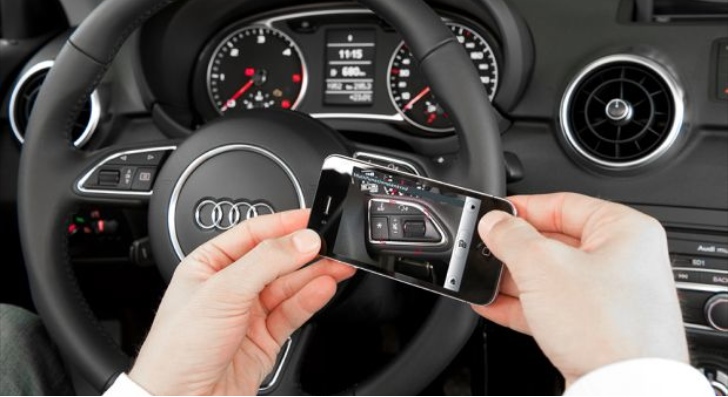
The Audi eKurzinfo app (demoed by Metaio for the first time at insideAR 2012) lets drivers have intuitive access to pages of the driver’s manual simply by pointing at the space in the car they’re interested in.
Is this new? Not exactly, one of the first implementations of AR was actually in car maintenance with mechanics – using big goggles connected to a laptop to make access to information so they could perform maintenance on the luxury cars. Does that surprise you to know that some of AR’s first uses weren’t even for games, to view an ad or other entertainment based things we have come to associate it with – it was utilitarian, functional and gave people access to information to do their jobs.
The changes are more subtle and at the same time more bold. Mobile has made a huge difference, but uses have too. Audi has been bold enough to deliver this application not only to their certified garages for skilled maintenance teams, but now into the hands of their prized end-users. And, this is the real change  - AR is not for techies anymore but for any user armed with a smart phone which is about 1 billion peoplearound the world today.
And, what about wearables?
Museums in Barcelona like the MACBA or MNAC have been using AR recently in their expos to showcase art or special exhibitions. Users equipped with an iPad and the Layar app can access alternative views or get detailed explanations about art pieces in the collection. Visitors of these museums aren’t necessarily art experts, so a little help from AR, makes the whole experience much more interactive and memorable.
In the last AR Meetup in Barcelona on October 3, I had the opportunity to talk to the different agencies who prepared those AR experiences. When asked what people thought about holding their arms with an iPad, the response was the same for all of them: we need glasses. Wow!
Just looking at the amount of wearables at AWE last June, this comes as no surprise, companies in this area have been around for a while but Google Glass has opened the door for a discussion around end consumers using them for AR, and not being a nerdy thing, which today is quite cool.


Thursday, September 5, 2013

AdTech London: Expectations for Augmented Reality apps


LONDON -I am psyched about attending AdTech next week in London –not only is the AdTech event franchise now a fixture around the globe when it comes to digital marketing, but it promises to offer a great blend of brands, publishers and agencies.

What do I expect from AdTech?

I expect to see some great examples of mobile marketing apps from big names and learn about success stories but hopefully also app flops, as these can reveal even more about what to do and not to do.

I also expect to hear about the challenges that ad agencies, app developers and brands have in providing innovative features like AR to end-users. Do they feel that users “get AR”? Is it the case that brands see AR as embedded in their mobile app experience or as a side feature of mobile?

Finally, I’m keen to find out what new channels publishers are looking to distribute their digital content through and what success they are having with AR in doing so.

At the forefront of the AR e-volution I've had a lot to do with the latest trends in AR and how this is expected to look in the future (it is not just about the wearables…)

I am hoping to help agencies at AdTech de-mystify AR –even though I am often surprised to hear people ask what the acronym “AR” stands for, most people are not familiar with the term. This is changing quickly, but separating the wheat from the chaff is still necessary to be able to reach out to a mass audience of mobile users.

AR can be easy for brands to implement. I’ll be sharing success stories from Ikea AR app (the no.1 most downloaded branded app in 2012) as well as other case studies . Each different but with common needs when it comes to image recognition and AR.

Any new technology needs to entice users by painting a picture of how they can be used. AR is no exception and I see many great use cases on a regular basis that I will be  sharing: from Museum Apps, Wine Apps, AR Maps through to Mobile Commerce apps (shoot and  add to wish list or shopping cart).

Last but not least, I’ll be demoing the speed and simplicity of image recognition and explaining why I believe it is the key gateway technology to a great AR experience within mobile apps.

Thursday, August 22, 2013

Creating great AR Mobile App Campaigns -Part 2 (the Ikea 2014 AR app)


I briefly discuss the IKEA 2013 catalogue app in my last post -well, guess what? The 2014 IKEA app is out.


Consumers can place the catalogue on the floor of a room in their home, point at the catalogue with their smartphone or tablet and see how a selected sofa, area rug or other item would look in that particular spot in the room if purchased.  A great try-before-you-buy solution which makes every user part smart shopper, part interior decorator.

Integrating AR into an app can be fun and engaging, with features like 3D model creation and animation.  At its core, AR is about visualizing the environment through a combination of real environment and digital content anchored to reality. 

This is exactly the experience offered by IKEA’s AR app.  However, aside from being cool to use (and being a preventative tool for any buyer’s remorse), what is it about the app that makes it so special?  Well, it’s not just the AR aspect of the app, it’s what IKEA has done around it.

AR is not magic.  It can only do so much.  It alone cannot get the word out about an app, cannot make an app come flying on its own into your home, cannot make users download an app, cannot make an app successful.  Although IKEA is not the first furniture company to use AR in an app, it is the first one to have successfully done so.  IKEA took existing, familiar technology to develop a new experience for consumers that didn’t need to be explained, dissected or examined—just promoted—and therein lies the difference.  IKEA threw some consumer marketing muscle behind the app through videos and outreach to major online consumer media outlets, thereby generating that coveted buzzword:  buzz.

Companies need to think of the bigger picture when developing an app, incorporating not only the tech aspects but the promotional side of things too. Many brands spend large chunks of time and money on developing the app itself, only to fail to plan how it will be launched and marketed to consumers.  If a company’s app only has 100 downloads, that’s not a stellar return on investment but rather a hefty sum thrown out the window, and it’s probably a safe bet that the next app-building budget will be slashed as a result. 
 Neither existing brand awareness nor a brand’s coolness factor will guarantee app downloads without the use of marketing punch, and AR apps are no exception.

So this is the beauty of the IKEA app—and the lesson to take away here.  For a successful app, create a useful app—one with a purpose—but also create a promotional and marketing budget in parallel that will support it, draw in users and encourage app downloads.  Also, ask how such an app will help users and if AR is really the best way to go about doing it.  AR is cool, but it cannot do the heavy lifting alone.

Wednesday, July 31, 2013

How can agencies produce great Augmented Reality campaigns?


If you are an agency (creative, advertising, mobile or digital) and you are new to augmented reality (AR) it is not easy to decide how to convert a creative idea into a fully fledged AR app.

Where do you start? What AR components do you need? What are the ingredients for a great AR app, be it a game, a marketing app or a functional app? What would it cost and how long will it take? How do you measure the Return on Investment (ROI) for the app?

Here is are 4 pointers that you may find helpful:

1. AR DOES NOT NEED TO BE COMPLICATED

Yes, it's true. Mention AR and instinctively people conjure images of 3D objects flying out of a mobile screen with complex graphic animation. True, you could do this but...it is not always essential. Linking physical objects like a packet of cereals to a TV advert can be done easily and economically simply by using image recognition or tracking (tracking will allow you to view the video on top of the box instead of opening a new screen on your device).

2. WHAT DO YOU NEED TO CREATE A GREAT AR APP?

Here is the tricky part -there are several components you could require for an AR app depending on the complexity of what you're looking to do. Take the IKEA AR shop catalogue for 2013 for example. This catalogue has 43 individual images dotted throughout the printed edition that link to digital content. Some link to videos (if you don't have these, you will need to produce them), some link to web pages (virtual stores where you can purchase items) and others still link to 3D animated computer graphics.

The production of the AR app required:

-a Tracking SDK
-an Image Recognition SDK
-creative computer graphics content
-mobile app development
-an AR creator platform to link "virtual buttons" to actual actions within the mobile app

3. WHAT SHOULD THE APP DO?

This links to the first point..."keep it simple" is my advice. It is clear some use cases work better than others and that this varies according to who you are targeting. AR for retail and print works great. Augmenting a magazine, newspaper or catalogue offers clear, tangible benefits to the reader -you see new content that is helpful or entertaining. AR for retail apps makes sense since indoors, GPS doesn't work, so using physical objects or shop signs as pointers for the app to perform an action is a clever workaround. Scan the poster displayed in the shop window and see special offers, for example.

4. WHAT SHOULD AN AR APP COST AND TAKE TO ROLLOUT?

It depends but....simple AR apps can be developed for around $20-25,000 as a very general rule of thumb. Complex ones can easily cost $100,000+ (hence the keep it simple rule!). A marketing app will offer an intangible return in terms of brand awareness and brand loyalty. Other AR apps generate revenue and more than pay for themselves in terms of ROI: a museum app that acts as a guide (audio and video) and lets you scan the popular exhibits to get AR content when you want it, is often offered at a premium in app stores and can have a short payback period. 

Wednesday, July 10, 2013

Augmented Reality 2.0 - From AR 1.0 (Hype) to AR 2.0 (Mainstream)

BARCELONA -I recently presented an overview of Augmented Reality to an interested customer describing some examples of note-worthy AR campaigns and how cloud-based image recognition helps solve many requirements of AR campaigns.

In fact, I believe we are now in AR 2.0, whereby AR is coming into the mainstream (thanks also to Google Glass) underpinned by powerful smartphones and 4G networks. Brands are coming on board, since consumers increasingly demand (and expect!) the physical products of their favourite brands to have a digital life. 

This AR experience can vary from a simple video or photo overlay to more complicated (3D) animations, though the latter have more of a gimmicky effect. Making AR work for brands means keeping it simple and focusing on the quality of the experience. This is where image recognition becomes key, being the gateway technology for AR and opening the path to enhance the user´s view of the world. 

It is also time to throw away notions of QR codes on print and objects being scanned by a user (nothing wrong however with users with QR codes on their phone being scanned themselves, e.g. for a airplane boarding pass). Applying QR codes for  marketing use cases never made much sense and was used for lack of a better option. Consumers everywhere (except Asia perhaps) have given a resounding no to this technology.

You can see below a selection of slides from my presentation: 

Monday, July 8, 2013

Augmented World Expo 2013 : AWE Summary and Video


SANTA CLARA, Calif. - Augmented World Expo has come and gone, and if there ever was a doubt about the resurgence of interest in AR in general, then the doubling in size of the key global showcase expo for AR is good evidence of this trend.

Big brands are sitting up to take notice of the AR scene -the combination of powerful devices and 4G connections mean that technological former limitations are gone. Augmented Reality works great on mobile, and it loads fast.

Consumers are also getting excited- Google Glass is all about taking AR into the mainstream..no wonder CNET is saying that "AR is the next big thing in tech" and that estimates are that AR will surpass1 billion users by 2020 (Tomi Ahonen, AWE13).

We are now firmly in AR 2.0...welcome.

AR works better with the power of the cloud -there are several reasons for this that I introduced at AWE together with Catchoom CTO Tomasz Adamek.

Check out the video of the talk here: 

Tuesday, May 14, 2013

Augmented World Expo (AWE) 2013 Santa Clara -Agenda overview and discounted tickets


Computing is changing inside out. The world is now the platform. ARE is now AWE. Welcome to the Augmented World!
Augmented World Expo (AWE), is the world’s largest gathering of designers, engineers and business leaders dedicated to solving real world problems in the Augmented World.
The way we experience the world will never be the same. We no longer interact with computers. We interact with the world. A set of emerging interrelated technologies such as augmented reality, gesture interaction, eyewear, wearables, smart things, cloud computing, big data, and 3D printing are completely changing the way we interact with people, places and things. These technologies create a digital layer that empowers humans to experience the world in a more advanced, engaging, and productive way.
Augmented World Expo will showcase the best in augmented experiences covering all aspects of life: health, education, emergency response, art, media and entertainment, retail, manufacturing, brand engagement, travel, automotive, and urban design. It will be the largest ever exposition to bring together technologies that will change our lives and the world.
In 2012, the third annual ARE event, over 600 buyers and builders of AR in entertainment, media, education, healthcare, government, tourism, automotive, sports and other vertical markets, united in the 2 day must-attend event in Silicon Valley.
Augmented Reality.ORG, the producer of AWE is proud to announce the maturing of an edgy conference about augmented reality into the world’s first expo about the augmented world.  If you loved ARE you are going to find Augmented World Expo the most important event of 2013.

AWE 2013 invites today’s technology leaders to learn, network, and share their expertise in technologies that change the way we interact with the world.  Presentations should cover a range of emerging technologies such as augmented reality, gesture interaction, eyewear, wearables, smart things, cloud computing, big data, and 3D printing. Presenters can choose from a set of topics and industries that address the latest trends, strategies and business growth opportunities of the augmented world.
AWE 2013 will be held at the Santa Clara Convention Center, California, on June 4-5, 2013 and is expected to draw 1,000 attendees. In addition to the presentation tracks, AWE 2013 will include mind-blowing keynotes by industry leaders on the main stage including my own talk (together with Catchoom CTO Tomasz Adamek) on the Mobile-Cloud Continuum a.k.a. how to get the most out of the cloud from your mobile device.
With the proven track record and the tremendous momentum in the Augmented Reality industry and interrelated technologies, AWE 2013 will set a new record and expected to draw 1000 attendees that seek to leverage augmented reality into a productive, sustainable and entertaining new medium. AWE 2013 will spotlight inspiring keynotes by industry luminaries, and feature more than a 100 speakers from leading Augmented World companies in more than 30 hours. Organized into business, technology and production tracks, the conference program is designed to address topics such as:
  • current augmented world market scope and what’s expected in the next 5 years
  • latest augmented world innovations, engines and tools
  • showcases and postmortems of landmark augmented world projects
  • how to leverage AW to advance your brand, attract and keep your customers
  • how to build successful campaigns and products that will delight users.
The exhibition floor will unite all the leading providers of Augmented World services and products, and offer a fantastic opportunity to witness demonstrations, speak with the architects of these experiences and network all participants in this exciting industry. Last year’s successful activities such as the ARt Gala, AR Start up launch pad, and The Auggies (best AR demo awards) will return to delight attendees. The new Augmented Future plenary session will feature ground breaking ideas that will change the augmented world.
You can get a discounted ticket here by using the following discount code AWE3CATCHOOM for a saving of $200 USD before May 17!

Wednesday, September 29, 2010

Articulated Naturality (AN) vs Augmented Reality (AR) -the new frontier of Mobile 2.0


QPC - Articulated Naturality Web from Justin Montgomery on Vimeo.

Special thanks to the great team at The Where Business who alerted me to this video about the fresh new notion of Articulated Naturality or AN. 

AN is set to take Augmented Reality (AR) to a whole new level. With an AN app, you could point at a hotel building, zoom in on a particular room, and find out whether it is available for that night or not. The company pitching AN widely is QPC, who particpated in the recent Summer Davos Conference.

Check out the video, where Matt Trubow, QPC CIO, explains why AN is set to give a 'flat' AR a much richer three dimensional element or a 'virtual universe'...inspriring stuff...

Sunday, June 20, 2010

Metaio, Augmented Reality and E-commerce - Retail Use Cases


San Francisco/Atlanta -The following is the press release from Metaio relating to their e-commerce Augmented Reality product that helps consumers see products in their own space (akin to the IKEA AR application in a previous blog post). It represents one more step towards AR becoming a mainstream technology.

The Internet changed how people shop. Now, YOUReality LLC and metaio Inc. are changing how people will shop online. With the introduction of its Online Retail Visualization 3D tool, YOUReality is making it possible for consumers to see products in their own space before they purchase them by integrating Augmented Reality into a suite of commerce applications. The new services allow shoppers to make more confident buying decisions, deliver retailers a higher sales conversion rate, and significantly lower product return costs.

Online shopping is attractive to an increasing number of consumers for its convenience, speed, product selection and other benefits. To make the shopping experience even more engaging and informative, many retailers are enhancing their websites with multimedia features such as video clips, virtual visualization or slide shows so that shoppers can better understand product features. With YOUReality, customers can even "bring it home" and try before they buy, allowing consumers to visualize context sensitive products with life-like 3D models in a photo of their own home environment. The resulting image provides a realistic view of what the object will look like in that space with the ability to move the item around (maintaining correct dimension and perspective) and change colors, styles, sizes and textures of the 3D object while viewing it in the photo.

By pioneering the concept of Retail Visualization using the metaio platform, YOUReality has harnessed the power of 3D for a practical purpose. "YOUReality gives a cool technology relevance in the world of commerce by driving retail sales through increased conversion rate," says YOUReality Founder, Michelle Fallon. "Retail Visualization takes the guesswork out of the visual aspects of shopping, such as selecting fabric choices, textures and colors, making the buying decision faster and easier because consumers can literally see furniture, electronics, appliances, even accessories, in their own space at the point of sale. Retail Visualization for e-commerce allows the user to visualize products in a web store and then add the selected items directly to the shopping cart to complete the transaction online," she says.

Thursday, January 7, 2010

The world in 2020: Mobile Predictions


URBANIA, 2020:


Woken up by my mobile phone alarm clock at 7am, thinking it was about time to change the tune of my music hologram wake up call. 'Quiet!' I shout at the mobile phone, turning the alarm off via the voice-activated command.


Time for a power breakfast, where I can pore over my favourite digital newspaper on my iKindle (it was only a matter of time before Apple and Amazon merged-think of the synergies!). Mmm...I need to re-program the coffee machine from my mobile, need more foamy milk on that cappuccino!


And while I'm at it, let me program the housebot (house robot) from my mobile so it feeds the cat at 5pm-can't think how we lived without those things before!


Out on the streets, I have some time for some early morning shopping before heading to my 'collaboration pod' at the office...I point my mobile's 50 MP camera at the supermarket and see through the Augmented Reality layer (can't believe this was so hyped only 10 years ago!) that there are some 2 for 1 offers at the Deli Counter..nice!


'And, Mr.Ferraro, may we suggest you try our Tuna-flavoured pizza topping today', says the Wal-Mart Digital Mobile Assistant, knowing that I tried the Tuna-flavoured pasta 3 times in a row last week.Maybe, I think..damn shame all we have today is tuna-flavour, and no real tunas anymore....


Shopping finished, time to head to work. 'Your body temperature is 0.3 degrees below optimal' says my mobile, having detected my body heat through its sensors. 'Long sleeves are recommended', it continues.Damn! I need to turn that auto-sensor off, it drives me crazy.Plus, now all my friends will have received the auto-chirp from it in real time, and will think I am a cissy!


Anyway, I checked the YaGoogle Weather Forecast this morning, and it said the day will warm up later.Just as well, the kids will be going to school this afternoon, after their remote-learning video classroom from home.


After a full day of holo-video conference calls, I'll be ready for a good gym work-out! My Mobile Personal Trainer (that speaks to me with a realistic Arnold Schwarzenegger voice) has me on a tough, fat-burning regime. Just as well that at my age, all my bio-data is wired in real-time to my virtual doctor, who is always there to send me a pop-up alert should things get too extreme.


As I enter the gates to my office and approach the main door where my retina will be scanned once more and cross-checked to my Personal Digital Identity (PDI) Key on my mobile , I have one of those thoughts we sometimes get: boy, how technology has moved on in the last decade!