Showing posts with label AR. Show all posts

Saturday, July 12, 2014

Layar-ing Blippar - Post-acquisition thoughts on major shake-up in AR browser market


BARCELONA - If you’re into AR and have played around with the many AR-enabled mobile apps published in iTunes and Google Play, you have probably heard by now about Blippar acquiring Layar. This means different things for everyone involved in the AR industry, for consumers, for professionals and for the future of the AR industry as a whole.

I first came into contact with Layar at a startup event in Barcelona in 2009 and was impressed with Layar's vision and ability to market AR's potential for immersive experiences on mobile to both techies and marketeers alike. I also described Layar's use of geo-location in my book on Location Aware Applications.

If you’re not entirely certain what those companies do, the rundown is that they both provide an app which enables consumers to scan printed media or packaged products that have an interactive campaign or digital content attached to them. Typically users know about that content because there is a call to action. Those apps compete with others like Junaio or Wikitude, alternative ‘AR browsers’.

The most prominent advantage of AR browsers is that users need only one app for multiple content. Once installed, it pulls new content on demand from the cloud.The disadvantage when comparing branded apps and browsers is for content creators. Brands and publishers have limited control of the whole experience (as well as the branding) and they share the same space with competitors.

Blippar has been doing a very good job of providing high quality experiences on their browser. Operating like an agency, they take care of the end to end solution but publish on Blippar’s app. Layar is probably the king in terms of volume of experiences inside their platform. But with volume and scale, comes some limitations on the versatility of the experiences as you cannot go one-by-one. It remains to be seen if a new Layar-Blippar browser app will lean more towards volume or towards curated content.


So what lies in store in the future? Beautifully crafted, branded AR-capable apps are more likely to win hearts-and-minds of mobile users.A foreseeable option is that, just as happened with location, AR and image recognition capabilities will increasingly be embedded within a multitude of apps in a seamless fashion. (Credit to D.Marimon for parts of this post).


Thursday, October 31, 2013

AdTech London -Summary & thoughts for traditional media


LONDON- Time waits for no man, and AdTech London has come and gone though I realise I never got a chance to summarise my experience there.

One of my objectives was to see how deeply augmented reality capabilities are being integrated into advertising experiences, especially those that cross over different media i.e. print to web.

It was clear to me that the effectiveness of augmented reality has been proven -a large newspaper group quoted some interesting stats on the effectiveness of recent ad campaigns that linked to digital content, with a clear route to monetization of those ads.

This made me think however that many publishers are still to fully grasp the opportunity to monetise with AR. Layar published a great article recently with some useful pointers:

1. Use AR to upsell print ads -that's right, AR can be used to turn those now standard ads into premium ads. Im fact, in Canada Glacier Media (a local publisher) plans to make an exra $7.5m thanks to their up-selling efforts for Layar-enhanced ads.

2. Sponsored Editorial Content. Special editorial features can be linked to video interviews and sponsored for anything from $1,000 to upwards of $10,000

3. Print to e-commerce. Mobile commerce is booming, with some web portals taking over 25% of sales via their mobile channel. What better way to find the stuff you want than by scanning your favourite magazines? Adding items in this way to a wishlist or shopping cart will soon be the most convenient way to discover and shop.

There is still a lot of way to go before traditional media grasps the augmented reality bull by the horns but the paradigm of visual search is already here. 

Monday, October 14, 2013

Not Sci-Fi anymore...why Augmented Reality is more real than you think


MUNICH- Guest post from David Marimon, Catchoom CEO

There are two things I want you remember after you read this blog:
·       AR is here and it has practical, everyday uses with sound technology
·       The market is accepting using it faster than you think
I want to show you why these things are true through an example, Audi.
Not long ago, we were hearing many skeptical voices talking about Augmented Reality (AR). Let me share a couple of anecdotes.
I remember in particular an attendee telling a panel formed by Layar, Metaio, Qualcomm executives and myself how nerdy we would look like with AR glasses. This was at Mobile World Congress in 2011.
Last month, I was speaking with the Head of Future Technologies at Pearson, a global publishing firm. She told me that AR is ready for the market and not something for the future, but they just need to figure out the best business model for everyone to make real money.
I could not agree more.
So what is she and others referring to when they say AR is ready? Let’s take a couple of recent examples.
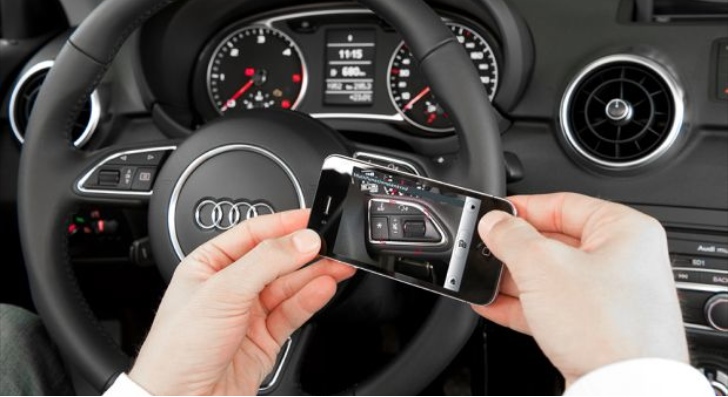
The Audi eKurzinfo app (demoed by Metaio for the first time at insideAR 2012) lets drivers have intuitive access to pages of the driver’s manual simply by pointing at the space in the car they’re interested in.
Is this new? Not exactly, one of the first implementations of AR was actually in car maintenance with mechanics – using big goggles connected to a laptop to make access to information so they could perform maintenance on the luxury cars. Does that surprise you to know that some of AR’s first uses weren’t even for games, to view an ad or other entertainment based things we have come to associate it with – it was utilitarian, functional and gave people access to information to do their jobs.
The changes are more subtle and at the same time more bold. Mobile has made a huge difference, but uses have too. Audi has been bold enough to deliver this application not only to their certified garages for skilled maintenance teams, but now into the hands of their prized end-users. And, this is the real change  - AR is not for techies anymore but for any user armed with a smart phone which is about 1 billion peoplearound the world today.
And, what about wearables?
Museums in Barcelona like the MACBA or MNAC have been using AR recently in their expos to showcase art or special exhibitions. Users equipped with an iPad and the Layar app can access alternative views or get detailed explanations about art pieces in the collection. Visitors of these museums aren’t necessarily art experts, so a little help from AR, makes the whole experience much more interactive and memorable.
In the last AR Meetup in Barcelona on October 3, I had the opportunity to talk to the different agencies who prepared those AR experiences. When asked what people thought about holding their arms with an iPad, the response was the same for all of them: we need glasses. Wow!
Just looking at the amount of wearables at AWE last June, this comes as no surprise, companies in this area have been around for a while but Google Glass has opened the door for a discussion around end consumers using them for AR, and not being a nerdy thing, which today is quite cool.


Thursday, September 5, 2013

AdTech London: Expectations for Augmented Reality apps


LONDON -I am psyched about attending AdTech next week in London –not only is the AdTech event franchise now a fixture around the globe when it comes to digital marketing, but it promises to offer a great blend of brands, publishers and agencies.

What do I expect from AdTech?

I expect to see some great examples of mobile marketing apps from big names and learn about success stories but hopefully also app flops, as these can reveal even more about what to do and not to do.

I also expect to hear about the challenges that ad agencies, app developers and brands have in providing innovative features like AR to end-users. Do they feel that users “get AR”? Is it the case that brands see AR as embedded in their mobile app experience or as a side feature of mobile?

Finally, I’m keen to find out what new channels publishers are looking to distribute their digital content through and what success they are having with AR in doing so.

At the forefront of the AR e-volution I've had a lot to do with the latest trends in AR and how this is expected to look in the future (it is not just about the wearables…)

I am hoping to help agencies at AdTech de-mystify AR –even though I am often surprised to hear people ask what the acronym “AR” stands for, most people are not familiar with the term. This is changing quickly, but separating the wheat from the chaff is still necessary to be able to reach out to a mass audience of mobile users.

AR can be easy for brands to implement. I’ll be sharing success stories from Ikea AR app (the no.1 most downloaded branded app in 2012) as well as other case studies . Each different but with common needs when it comes to image recognition and AR.

Any new technology needs to entice users by painting a picture of how they can be used. AR is no exception and I see many great use cases on a regular basis that I will be  sharing: from Museum Apps, Wine Apps, AR Maps through to Mobile Commerce apps (shoot and  add to wish list or shopping cart).

Last but not least, I’ll be demoing the speed and simplicity of image recognition and explaining why I believe it is the key gateway technology to a great AR experience within mobile apps.

Wednesday, July 31, 2013

How can agencies produce great Augmented Reality campaigns?


If you are an agency (creative, advertising, mobile or digital) and you are new to augmented reality (AR) it is not easy to decide how to convert a creative idea into a fully fledged AR app.

Where do you start? What AR components do you need? What are the ingredients for a great AR app, be it a game, a marketing app or a functional app? What would it cost and how long will it take? How do you measure the Return on Investment (ROI) for the app?

Here is are 4 pointers that you may find helpful:

1. AR DOES NOT NEED TO BE COMPLICATED

Yes, it's true. Mention AR and instinctively people conjure images of 3D objects flying out of a mobile screen with complex graphic animation. True, you could do this but...it is not always essential. Linking physical objects like a packet of cereals to a TV advert can be done easily and economically simply by using image recognition or tracking (tracking will allow you to view the video on top of the box instead of opening a new screen on your device).

2. WHAT DO YOU NEED TO CREATE A GREAT AR APP?

Here is the tricky part -there are several components you could require for an AR app depending on the complexity of what you're looking to do. Take the IKEA AR shop catalogue for 2013 for example. This catalogue has 43 individual images dotted throughout the printed edition that link to digital content. Some link to videos (if you don't have these, you will need to produce them), some link to web pages (virtual stores where you can purchase items) and others still link to 3D animated computer graphics.

The production of the AR app required:

-a Tracking SDK
-an Image Recognition SDK
-creative computer graphics content
-mobile app development
-an AR creator platform to link "virtual buttons" to actual actions within the mobile app

3. WHAT SHOULD THE APP DO?

This links to the first point..."keep it simple" is my advice. It is clear some use cases work better than others and that this varies according to who you are targeting. AR for retail and print works great. Augmenting a magazine, newspaper or catalogue offers clear, tangible benefits to the reader -you see new content that is helpful or entertaining. AR for retail apps makes sense since indoors, GPS doesn't work, so using physical objects or shop signs as pointers for the app to perform an action is a clever workaround. Scan the poster displayed in the shop window and see special offers, for example.

4. WHAT SHOULD AN AR APP COST AND TAKE TO ROLLOUT?

It depends but....simple AR apps can be developed for around $20-25,000 as a very general rule of thumb. Complex ones can easily cost $100,000+ (hence the keep it simple rule!). A marketing app will offer an intangible return in terms of brand awareness and brand loyalty. Other AR apps generate revenue and more than pay for themselves in terms of ROI: a museum app that acts as a guide (audio and video) and lets you scan the popular exhibits to get AR content when you want it, is often offered at a premium in app stores and can have a short payback period.